

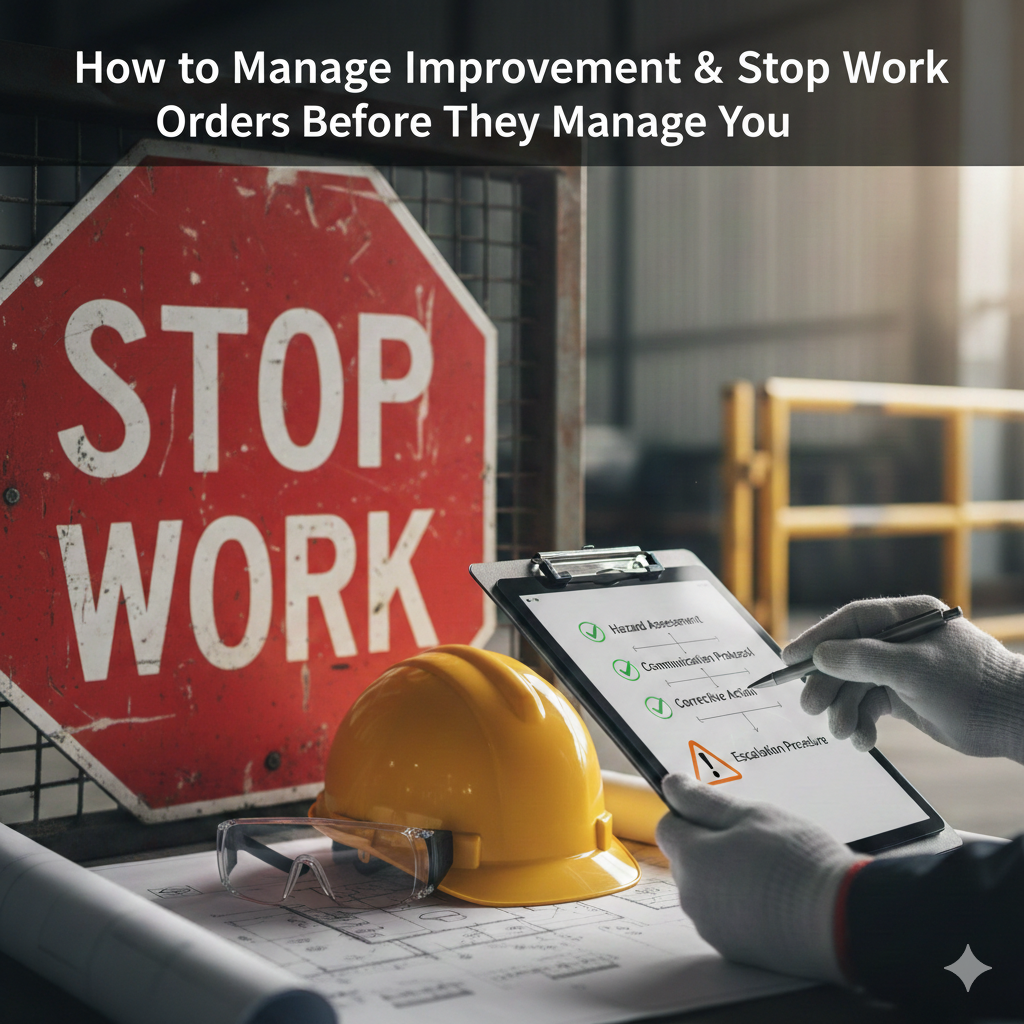
How to Manage Improvement & Stop Work Orders Before They Manage You
Disclaimer: This article is intended to support leadership decision-making. Occupational health and safety laws and enforcement practices vary by jurisdiction. Always confirm your obligations with your local regulator.
Improvement and Stop Work Orders are not just safety issues. They are business events. Most companies only learn about them after they’ve received one from the field or the plant. By then, production is disrupted, reputations are questioned, and enforcement history is created. Professional organizations prepare before that happens.
In most jurisdictions, Improvement and Stop Work Orders are public:
- Regulators publish them.
- General contractors, owners, and insurers can review them.
- If an order stands, it becomes part of your permanent record.
- No context. No explanation. Just the fact that it occurred.
That record can influence bids, prequalification, and how your company is viewed after a future incident.
It is also important to understand that inspectors derive authority from legislation. Orders must be tied to specific sections of the Act or Regulations — not preference or opinion. Strong companies know their rights, respond professionally, and document everything.
If an order is issued, time matters as appeal windows are limited (usually to 14 days). Miss the deadline and the order stands. Unchallenged enforcement becomes part of your company record, and that history is difficult to overcome. In the event of a serious incident or other investigation in the future, your past enforcement record can influence the decisions of the investigator. Because investigators will review your enforcement history, past patterns will paint a picture of your company, make it more likely that stronger action will be taken against you and can weaken your due diligence defense.
In some cases, unsafe work at one site can lead to enforcement across multiple sites if the issue appears systemic. One breakdown in supervision can create project delays, contractual penalties, and strained client relationships. This is why leadership in the field matters.
Ask yourself:
- Would you be comfortable if a GC reviewed your enforcement history today?
- Can your supervisors clearly explain your critical safety standards?
- Can you prove who was trained, when, and how?
- Are unsafe acts corrected before inspectors ever see them?
Improvement and Stop Work Orders do not happen because people do not care. They happen when leadership systems fail under pressure.
The full Safety Leadership Talk and Improvement & Stop Work Order Management Checklist outlines:
- What to have in place before work begins
- How supervisors should respond during inspections
- What to do immediately if an order is issued
- How to protect your enforcement history long term